- Astrology basics
- Astronomy
- Zodiac signs
- December astrology
Astrology vs astronomy: What each studies and why it matters
Astronomy investigates the physical sky; astrology interprets it symbolically. Here’s how their methods differ, what zodiac signs actually represent, and how to read December’s astrology without confusing reflection with scientific prediction.
Astrology vs astronomy: The basic difference
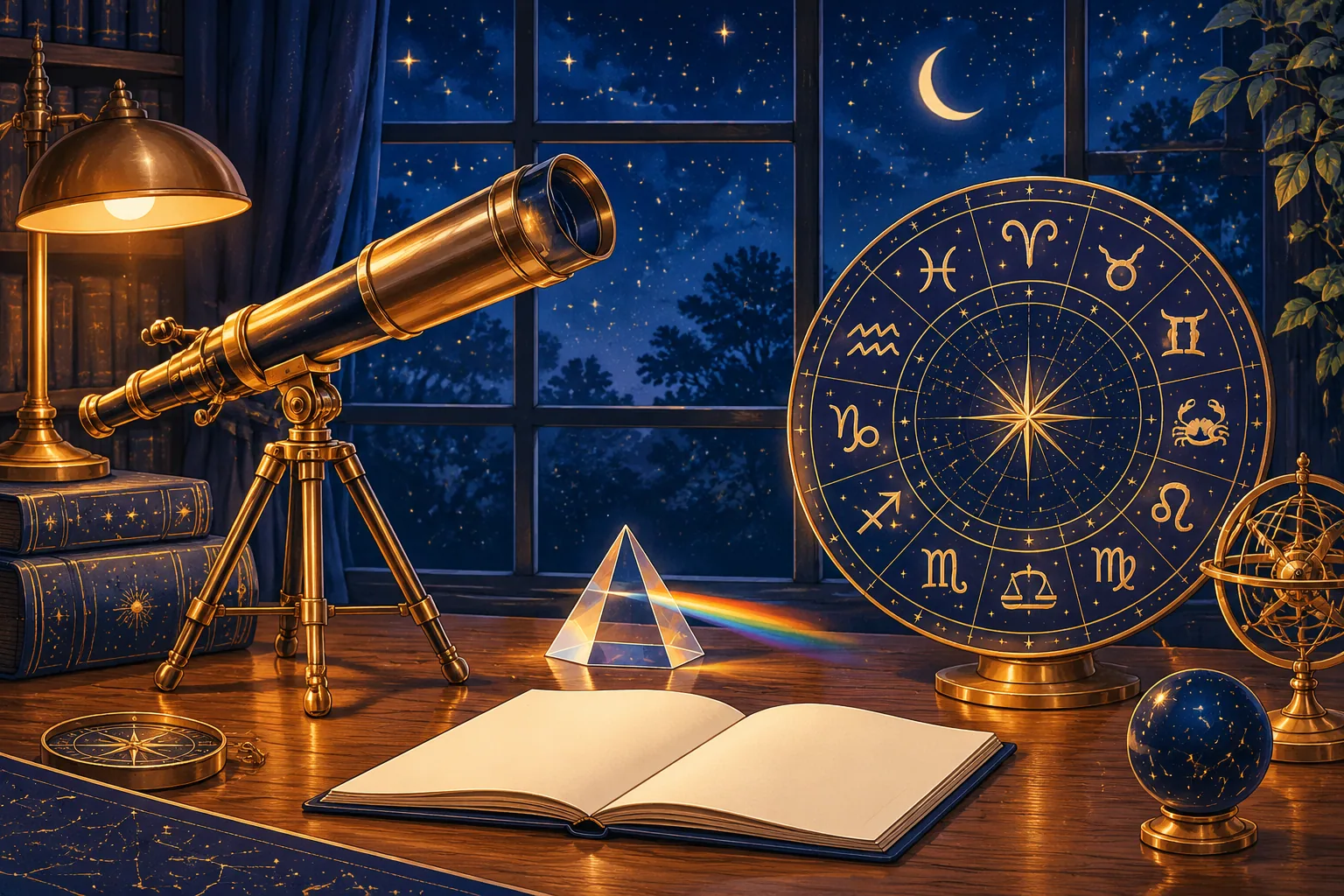
Evening is when this distinction becomes easiest to picture: you look up at the sky, then open a horoscope on your phone. Astronomy asks what those celestial objects are and how they behave. Astrology asks what symbolic meaning people might draw from their positions. That’s the core of astrology vs astronomy: one is a science; the other is an interpretive tradition.
Astronomy studies celestial objects and phenomena, including planets, stars, galaxies, and the physical processes behind them. It uses observation, mathematics, and testable models. Astrology connects celestial patterns with themes in human life, such as relationships or responsibility.
Astrological interpretations are not scientifically established predictions. You can enjoy a horoscope as a prompt for reflection without treating it as evidence that an event will happen.
The two practices share parts of their history, and both pay attention to the sky. But sharing a subject doesn’t mean they use the same methods—or support the same kinds of claims.
How each practice works
An astronomer might measure a planet’s motion, analyze the light from a distant star, or test a model against telescope observations. The crucial question is whether the explanation holds up when checked against evidence. Calculating celestial positions is a scientific task; those calculations can also supply the coordinates astrologers use.
An astrologer takes those positions and reads them through a symbolic framework. In modern Western tropical astrology, planets represent themes, signs describe styles of expression, and houses organize life areas. An aspect is an angle between celestial bodies that astrologers interpret as a relationship between their themes.
A birth chart maps the sky for a particular birth time and place. You can explore that layout with a birth chart calculator, but an accurate chart calculation does not establish that its personality interpretation is scientifically valid. Those are separate questions.
For the Sun-sign example below, we use whole-sign houses: your Sun sign counts as the first house, and each following sign becomes the next house. This is a simplified reading framework, not an individualized astronomical finding about your life.
Common myths, without the eye roll
“Astrology is just another name for astronomy.” Not anymore. Their histories overlap, but modern astronomy tests physical explanations. Astrology assigns symbolic meaning. Calling both sciences blurs a distinction you need when deciding how much weight to give a claim.
“Your zodiac sign is simply the constellation behind the Sun.” In tropical astrology, the zodiac is divided into twelve equal sections anchored to the seasonal equinoxes and solstices. Constellations are named regions of the sky with unequal sizes. Tropical signs and astronomical constellations are not interchangeable; they are different reference systems.
“A horoscope that sounds accurate proves astrology works.” Recognition can feel compelling, but a personal match is not a controlled test. Broad wording, selective memory, and knowing your sign can affect what you notice. Ask whether a statement is specific enough to be wrong—and whether you would recognize yourself in another sign’s reading.
“Compatibility tells you whether to stay together.” A sign compatibility guide can offer conversation starters, not a verdict. If a description mentions different communication styles, talk about the unanswered message. Your partner’s actual behavior matters more than a symbolic match.
What this means for December’s sky
Here’s a concrete example available as of November 28, 2026: the new Moon in Sagittarius occurs on December 9, 2026, at 00:52 UTC. Your local calendar date may differ by time zone.
Astronomically, a new Moon occurs when the Moon is near the Sun’s direction in our sky, with its illuminated side facing mostly away from Earth. That phase is calculable. In tropical astrology, its Sagittarius placement is interpreted through themes such as learning and exploration. Reading it as a fresh-start prompt is symbolism, not proof that a fresh start will arrive.
Using whole-sign houses counted from your Sun sign, here’s how you could turn that same event into a different, practical question for each sign:
- Aries: In your 9th house of learning and travel, choose one course to investigate before paying a registration fee.
- Taurus: The 8th-house focus is shared resources; set aside time to review a joint bill with the person who shares it.
- Gemini: Your 7th-house relationship prompt is to ask a partner what a fair division of weekend plans looks like.
- Cancer: In the 6th house of routines, test a short walk after lunch rather than rebuilding your whole schedule.
- Leo: Your 5th-house creativity prompt is to give an unfinished personal project one uninterrupted hour.
- Virgo: The 4th-house home emphasis offers a reason to discuss how one crowded room could work better.
- Libra: In the 3rd house of communication, draft the message you’ve postponed and check that your request is clear.
- Scorpio: Your 2nd-house money prompt is to review recurring expenses against what you actually use.
- Sagittarius: The 1st-house identity focus invites you to introduce yourself without leading with your job title.
- Capricorn: In the 12th house of retreat, protect a quiet evening from optional commitments.
- Aquarius: Your 11th-house community prompt is to contact the friend with whom you keep saying you’ll make plans.
- Pisces: The 10th-house career emphasis offers a prompt to define what you want from your next work conversation.
None of these actions requires believing that the Moon causes a particular outcome. If you read daily horoscopes, use the same approach: turn a theme into a question, then check it against your circumstances.
Short FAQ
Is astrology a science?
Astrology is not established as a scientific method for predicting personality or life events. Its interpretations have not demonstrated reliable predictive validity under controlled testing. That doesn’t prevent you from finding personal meaning in it, but meaning and evidence are different things.
Can you enjoy astrology and trust astronomy?
Yes. You can appreciate a symbolic reading while accepting scientific explanations of the sky. Keep the boundary clear: a telescope observation and a horoscope interpretation are different kinds of information, even when they refer to the same object.
Does an exact event time make a horoscope exact?
No. A precise time describes a calculated celestial event. It doesn’t transfer that precision to a claim about when you’ll meet someone or receive a message. Use dates to understand the astrological framework, not to put your life on a countdown.